Get 7% For all purchase above RS.999 - USE CODE "VASTRAAMAN" 🎁

Making Your Kurtis Last: A Simple Guide to Fabric Care
12/8/20252 min read
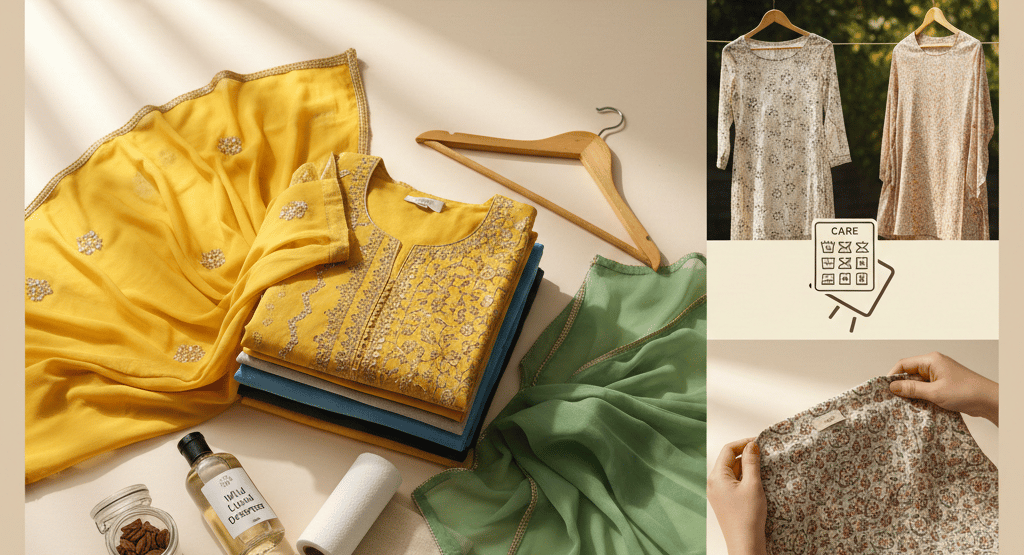

Overview of Fabric Care for Kurtis
Kurtis are a staple of traditional and modern wardrobes, celebrated for their comfort and style. However, maintaining the quality and longevity of your kurtis involves understanding the specific needs of the fabrics used in their construction. This guide provides essential tips on washing, ironing, and storage to ensure your kurtis remain in pristine condition.
Washing Techniques for Different Fabrics
Each fabric has its unique care requirements. For kurtis made from delicate materials like chiffon, hand-washing is the best option. Gently immerse the fabric in cold water mixed with a mild detergent, swishing it lightly without wringing or twisting, to prevent any damage. Rinse thoroughly and allow it to air dry away from direct sunlight, which can fade colors.
Silk kurtis, especially those embellished with heavy embroidery, should ideally be dry-cleaned. This method prevents the risk of shrinking or damaging intricate designs, ensuring your garment retains its beauty.
For cotton kurtis, machine-washing is often safe; however, it's essential to turn them inside out to minimize friction and prevent color fading. To avoid shrinkage, use cold water and a gentle cycle. Adding a fabric softener can help maintain softness and prevent stiffness.
Ironing Your Kurtis
Ironing can greatly affect the appearance of your kurtis. Always check the fabric care label for appropriate ironing temperatures. For silk and chiffon, use a low heat setting and place a thin cloth over the fabric to avoid burn marks. Ensure to steam rather than press too hard, which can flatten the texture.
Cotton kurtis can handle a higher temperature, making them easier to iron. It is recommended to iron them while damp for best results, achieving a crisp finish while ensuring your garment is wrinkle-free.
Storage Solutions for Longevity
Proper storage also plays a crucial role in the longevity of your kurtis. For everyday wear, consider using padded hangers to maintain the shape of the garment. Avoid hangers with sharp edges that can cause strain on the fabric.
For kurtis you wear less frequently, folding them neatly and storing them in breathable cotton bags can prevent dust accumulation and keep them safe from moths. In humid seasons, using silica gel packs in your storage can help absorb excess moisture and prevent mold, especially for delicate fabrics.
Following these practical tips will not only keep your kurtis looking fresh and beautiful but also help you get the most value out of your investment. By understanding the needs of your fabrics and taking the time to care for them, your kurtis will last for many seasons to come.
Follow
📧 vastraaman@gmail.com
📞 +91 85903 70609
Vastraaman
Elegance Woven in Every Thread
© 2025 Vastraaman. All Rights Reserved.
Handcrafted with love in India.
🕒 Mon – Sat: 10:00 AM – 7:00 PM
📍 Pandalam Kerala, India